
For many businesses, choosing a microsoft csp partner starts with one practical need: getting the right licenses at the right price. That matters, but licensing is only one part of a successful Microsoft 365 environment.
The real value of a partner shows up after procurement. A strong Microsoft 365 partner should help your team implement the platform properly, manage it confidently, solve issues quickly, and continuously improve how your business uses the tools. In other words, the best partner does far more than resell subscriptions.
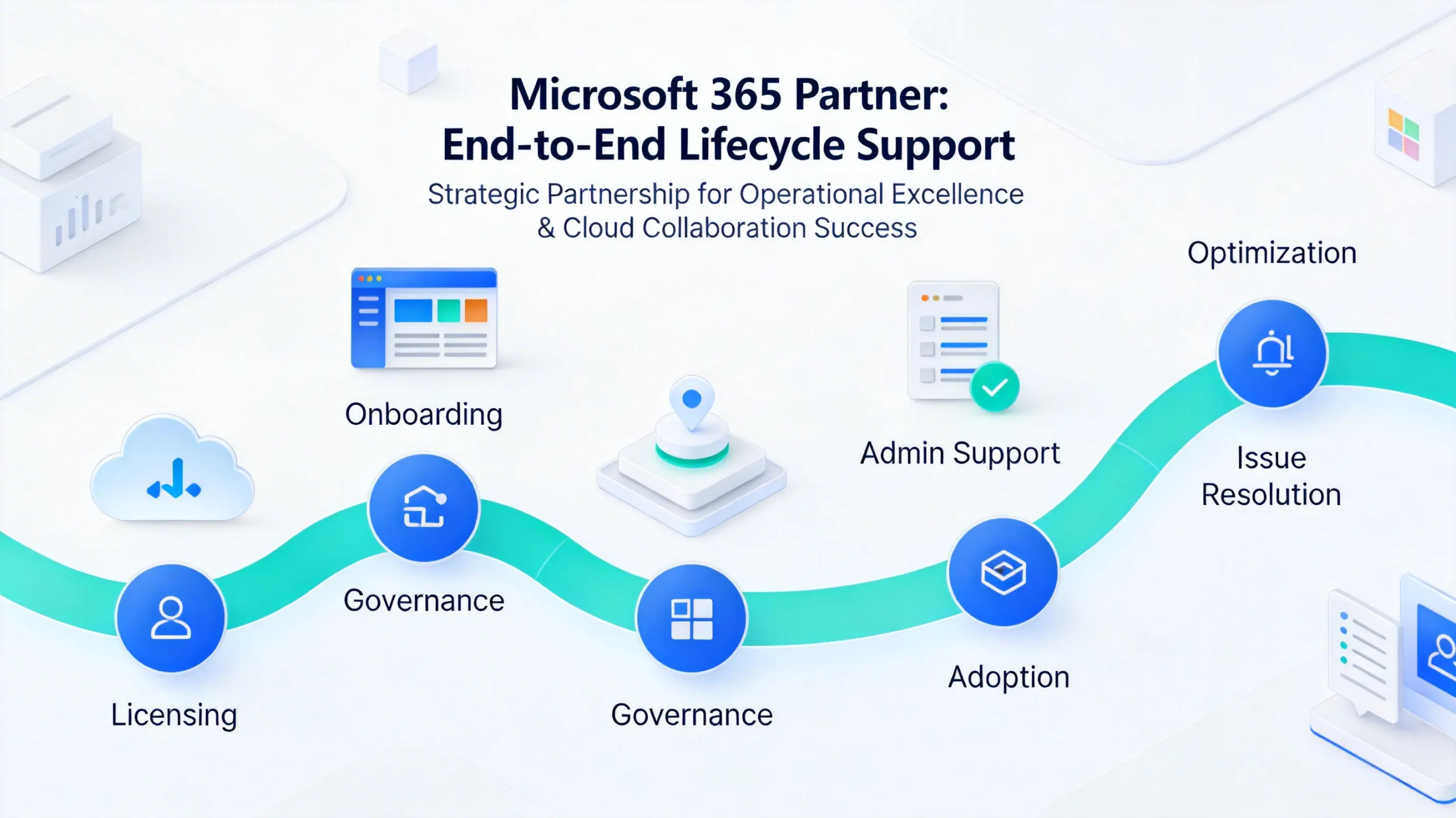
If you are evaluating providers, it helps to know what meaningful support looks like. The right partner should offer guidance across onboarding, governance, administration, issue resolution, adoption, and ongoing optimization. These are the areas where long-term business value is created.
Licensing Is Only the Starting Point
Licensing support is important, especially when businesses need help matching plans to user roles, controlling costs, or adjusting subscriptions as they grow. Good microsoft 365 licensing support should make it easier to understand which plans fit your organization and how to avoid paying for tools you do not need.
But once licensing is in place, businesses still face a series of operational and strategic questions:
- How will users be onboarded?
- How will security and compliance settings be managed?
- Who will handle admin tasks and troubleshoot problems?
- How will employees actually adopt the tools effectively?
- How will the environment be reviewed and improved over time?
This is where a capable microsoft csp partner becomes more than a vendor. They become a support and advisory partner that helps your organization get real value from Microsoft 365.
1. Onboarding and Deployment Support

A Microsoft 365 rollout can impact identity, email, collaboration, device management, file access, and security. Even a relatively simple deployment can become complicated without proper planning.
A reliable partner should support onboarding by helping with:
- tenant setup and configuration
- domain and DNS preparation
- mailbox migration and email setup
- Microsoft Teams and SharePoint deployment
- user provisioning and permissions
- security baseline setup
- rollout planning and phased implementation
This early-stage work can have a major effect on user experience and long-term system stability. If onboarding is rushed or poorly managed, businesses often end up with avoidable configuration issues, access confusion, and adoption problems.
Strong microsoft 365 partner services should include a clear implementation approach, realistic timelines, and support that aligns technical setup with business needs.
2. Governance and Policy Guidance

Many companies underestimate how quickly Microsoft 365 can become difficult to manage without governance. As users create Teams, SharePoint sites, shared mailboxes, and external sharing links, the environment can become fragmented and risky.
A support partner should help define governance standards such as:
- user access policies
- role-based admin controls
- data sharing and external collaboration rules
- retention and backup considerations
- naming conventions and provisioning rules
- compliance and security settings
- lifecycle management for Teams, groups, and sites
This is one of the most important areas where microsoft 365 support services go beyond licensing. Governance creates consistency, reduces risk, and gives internal teams a framework for managing Microsoft 365 at scale.
When evaluating a provider, ask whether they can advise on governance strategy, not just technical setup. A partner that only sells licenses may not help you build a sustainable operating model.
3. Day-to-Day Admin Support
Microsoft 365 requires ongoing administration. Users get added and removed, permissions change, mail flow issues appear, security alerts need review, and policies must be updated as the business evolves.
A true support partner should be able to assist with routine administrative needs such as:
- user account setup and deprovisioning
- license assignment changes
- password reset and access issues
- mailbox permissions and shared mailbox support
- Teams and SharePoint admin tasks
- security policy updates
- Exchange, Entra ID, and endpoint administration
- general tenant health checks
This kind of operational help matters most for lean IT teams or businesses without dedicated Microsoft 365 specialists in-house. Good microsoft 365 partner services should reduce the burden on internal staff and provide dependable expertise when day-to-day tasks become time-consuming or complex.
4. Issue Resolution and Escalation Support
Every business eventually runs into Microsoft 365 issues. Users may be unable to access email, Teams may not behave as expected, synchronization can fail, or policies may conflict with business workflows.
When that happens, your partner should do more than point you to documentation. A strong microsoft csp partner should help investigate problems, identify root causes, and guide resolution quickly.
Support capabilities should include:
- troubleshooting user and admin issues
- diagnosing mail flow, login, and permissions problems
- investigating Microsoft 365 service disruptions
- coordinating escalations when needed
- translating technical issues into clear business impact
- keeping stakeholders updated until resolution
This is where provider quality becomes very visible. Responsive support can reduce downtime, lower frustration, and keep teams productive. Weak support, by contrast, often leaves businesses caught between internal users and Microsoft support queues.
When assessing microsoft 365 support services, ask how incidents are handled, what response expectations look like, and whether the partner provides hands-on remediation or only basic guidance.
5. Adoption and User Enablement

Buying Microsoft 365 does not guarantee employees will use it well. Many organizations only tap into a fraction of the value because staff stay attached to old workflows or never receive proper guidance.
A strong partner should help drive adoption by supporting:
- user onboarding and training
- change management communication
- best practices for Teams, OneDrive, and SharePoint
- guidance on collaboration workflows
- department-specific use cases
- end-user support resources
Adoption support matters because the return on Microsoft 365 depends on how effectively people use the tools. Without training and enablement, businesses may end up paying for advanced capabilities that never become part of daily operations.
This is another area where microsoft 365 partner services should extend beyond procurement. The right partner helps turn technology into usable business processes.
6. Ongoing Optimization and Strategic Advice
Microsoft 365 is not a one-time implementation. New features are released regularly, business needs change, and security expectations continue to evolve. That means your environment should be reviewed and refined over time.
A valuable partner should help with ongoing optimization by offering:
- periodic tenant reviews
- licensing right-sizing recommendations
- security posture improvements
- usage and adoption insights
- workflow enhancement opportunities
- roadmap guidance for new Microsoft capabilities
- recommendations for better cost control and efficiency
This is where a partner becomes a long-term advisor rather than just a reseller. Good microsoft 365 licensing support should not only help you purchase licenses, but also help you reassess whether your licensing and configuration still align with actual usage and business priorities.
An experienced microsoft csp partner should be able to identify gaps, flag unused potential, and suggest practical next steps for improvement.
What to Look for When Evaluating a Microsoft 365 Partner
If you are comparing providers, focus on the breadth and depth of support they can offer after the sale. Ask questions such as:
- Do they provide structured onboarding and migration support?
- Can they advise on governance and security best practices?
- Do they offer ongoing admin support for daily operational needs?
- How do they handle troubleshooting and escalations?
- Can they support user adoption and change management?
- Do they proactively review and optimize the environment over time?
The best microsoft 365 support services are not limited to transactions. They help businesses build a stable, secure, and productive Microsoft 365 environment that continues to improve.
Beyond Licensing, Support Is Where Value Is Created
Licensing is essential, but it is only the entry point. The real difference between providers shows up in the quality of support, guidance, and ongoing partnership they deliver.
A dependable microsoft csp partner should help your business onboard successfully, establish governance, manage administration, resolve issues, support adoption, and optimize Microsoft 365 over time. That is what transforms Microsoft 365 from a software subscription into a platform that genuinely supports business performance.
When evaluating providers, look beyond pricing and procurement. The right partner will not just help you buy Microsoft 365. They will help you run it better.