
Why Strategic BPO Is No Longer Just Cost-Saving — But a Growth Lever for SMEs and Enterprises?
In today’s volatile business environment, organizations are under pressure to scale faster, operate leaner, and remain digitally competitive. Business Process Outsourcing (BPO) has evolved from a simple cost-reduction tactic into a strategic growth lever for both SMEs and large enterprises.
Vietnam, in particular, is emerging as a high-value BPO destination in the Asia-Pacific region — combining cost efficiency, skilled talent, and digital maturity.
At iTechwx, we see modern BPO not as outsourcing tasks — but as outsourcing outcomes.
1. The Shift from Traditional Outsourcing to Strategic BPO
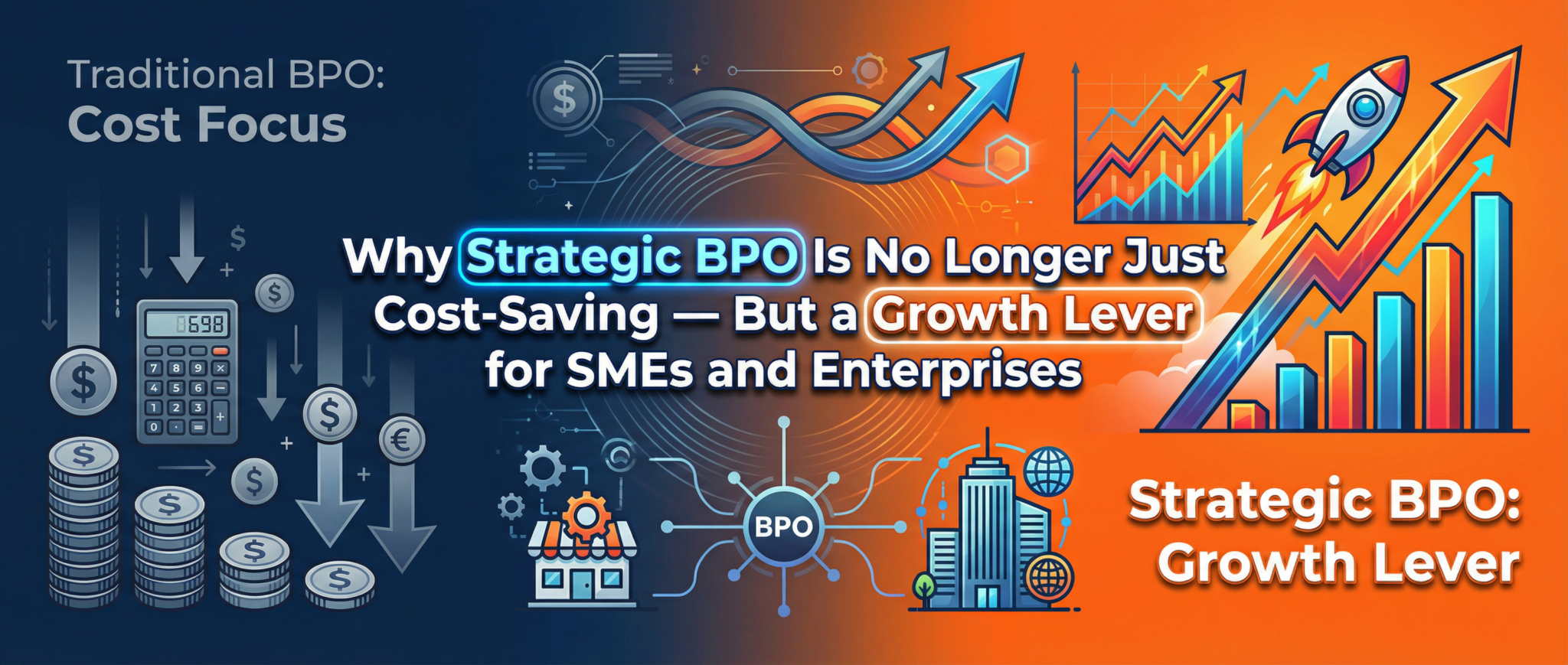
Traditional BPO focused on labor arbitrage — reducing operational expenses by moving repetitive tasks offshore.
Strategic BPO is different. It focuses on:
Process optimization
Technology integration
Performance measurement
Long-term scalability
Risk management
Global consulting leaders like Accenture and Deloitte have long emphasized that modern outsourcing must align with business transformation — not just operations.
For SMEs, this means accessing enterprise-level capabilities without building internal infrastructure.
For enterprises, it means increasing agility while protecting margins.
2. Why Vietnam Is a Strategic BPO Hub
Vietnam offers a unique combination of advantages:
✔ Skilled Workforce
Strong IT and business graduates
High adaptability to global processes
Growing English proficiency
✔ Cost-to-Value Advantage
Lower operational costs compared to Singapore, Hong Kong, or developed APAC markets — while maintaining service quality.
✔ Digital Readiness
Widespread adoption of cloud platforms such as Microsoft Azure and Microsoft 365 enables secure, scalable collaboration across borders.
This makes Vietnam ideal not only for back-office support, but also for IT outsourcing (ITO), tech support, finance operations, customer service, and digital operations.
3. How SMEs Benefit from Strategic BPO
For SMEs, building internal teams across IT, HR, finance, and customer service can strain capital and management bandwidth.
Strategic BPO enables SMEs to:
-
Convert fixed costs into variable costs
-
Access specialized expertise
-
Scale operations without heavy CapEx
-
Focus leadership on revenue-driving activities
Instead of hiring 10 internal staff, SMEs can deploy a managed BPO team aligned with KPIs and SLAs.
4. How Enterprises Use BPO for Competitive Advantage
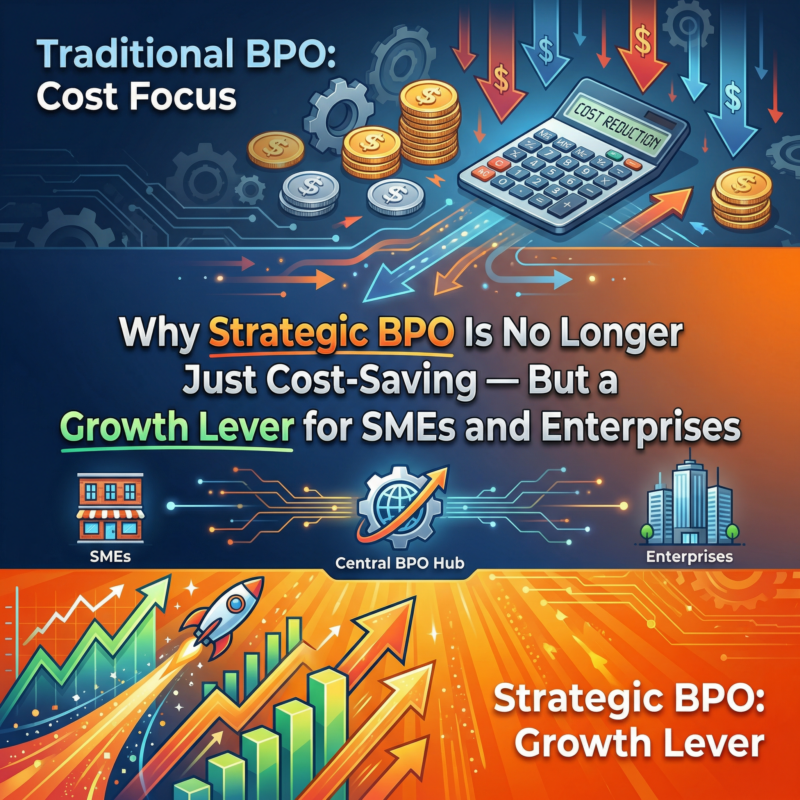
Enterprises are no longer outsourcing only to reduce cost — they outsource to:
Improve process efficiency
Accelerate digital transformation
Enhance compliance and data security
Expand into new markets
An integrated approach — combining BPO with cloud services and local compliance expertise — reduces operational risk and enhances governance.
This is particularly important when expanding into emerging markets like Vietnam.
5. The Integrated Model: Beyond BPO
Modern enterprises increasingly require more than standalone outsourcing.
A structured approach may include:
IT Recruitment for specialized roles
Employer of Record (EOR) for compliant hiring
Cloud Service Provider (CSP) for secure infrastructure
BPO/ITO for scalable operations
When these services operate together, businesses gain a unified ecosystem rather than fragmented vendors.
At iTechwx, we design BPO solutions that integrate technology, talent, and operational strategy — enabling clients to scale with confidence.
Conclusion: BPO as a Strategic Growth Engine
BPO is no longer about moving tasks.
It is about building capability, resilience, and scalability.
For SMEs, it unlocks access to enterprise-level operations.
For enterprises, it enhances agility and operational excellence.
Vietnam stands at the center of this transformation — and businesses that leverage strategic BPO today will be better positioned for sustainable growth tomorrow.